
Author: Christopher Burdick
If you’ve been following SEO trends lately, you’ll know that we aren’t just competing for those “ten blue links” anymore. We’re fighting for space in “Position Zero” (Google’s featured snippets), knowledge panels, and AI-driven answers in Google’s AIOs (AI Overviews), ChatGPT’s citations, and others. Today’s SEO now includes what we call GEO, or Generative Engine Optimization.
But first, some definitions:
- Featured Snippets: Those quick boxes at the top of Google’s results page that give an immediate answer to a query.
- Zero-Click Searches: When a user’s query is answered directly on the search results page with no need to click through to a website.
- AIOs: Google’s AI Overviews combine information from multiple sources to generate a detailed, personalized response, often eliminating the need for a user to click through to websites.
It’s easy to see these as a threat to your traffic. But in reality, if you position yourself as the authority, you’ll build trust, leading to branding wins, future visits, and long-term growth. Now let’s talk about how to make it happen.
1. Nail Your On-Page Content Structure
✔️ Be Clear and Concise: Provide an immediate 1-2 sentence summary at the top of your article or section.
✔️ Use Lists and Tables: Organized formats are far more likely to be pulled into a featured snippet or AI excerpt.
✔️ Maintain Logical Hierarchy: H1 for your article title, H2 for primary sections, H3 for subsections etc. Organized content helps search engines parse and present your info properly.
2. Keep It Conversational
✔️ Write for Humans: Write like you’re chatting with a friend. People talk to search engines and AI chatbots in a question and answer style.
✔️ Contextual Keywords: Aim for question-based terms (“How do I…”, “What is…”). This aligns well with both snippet optimization and AI’s question-answer format.
✔️ Intent Matching: If someone wants a quick definition, lead with a definition. If they want an in-depth how-to, structure it step by step.
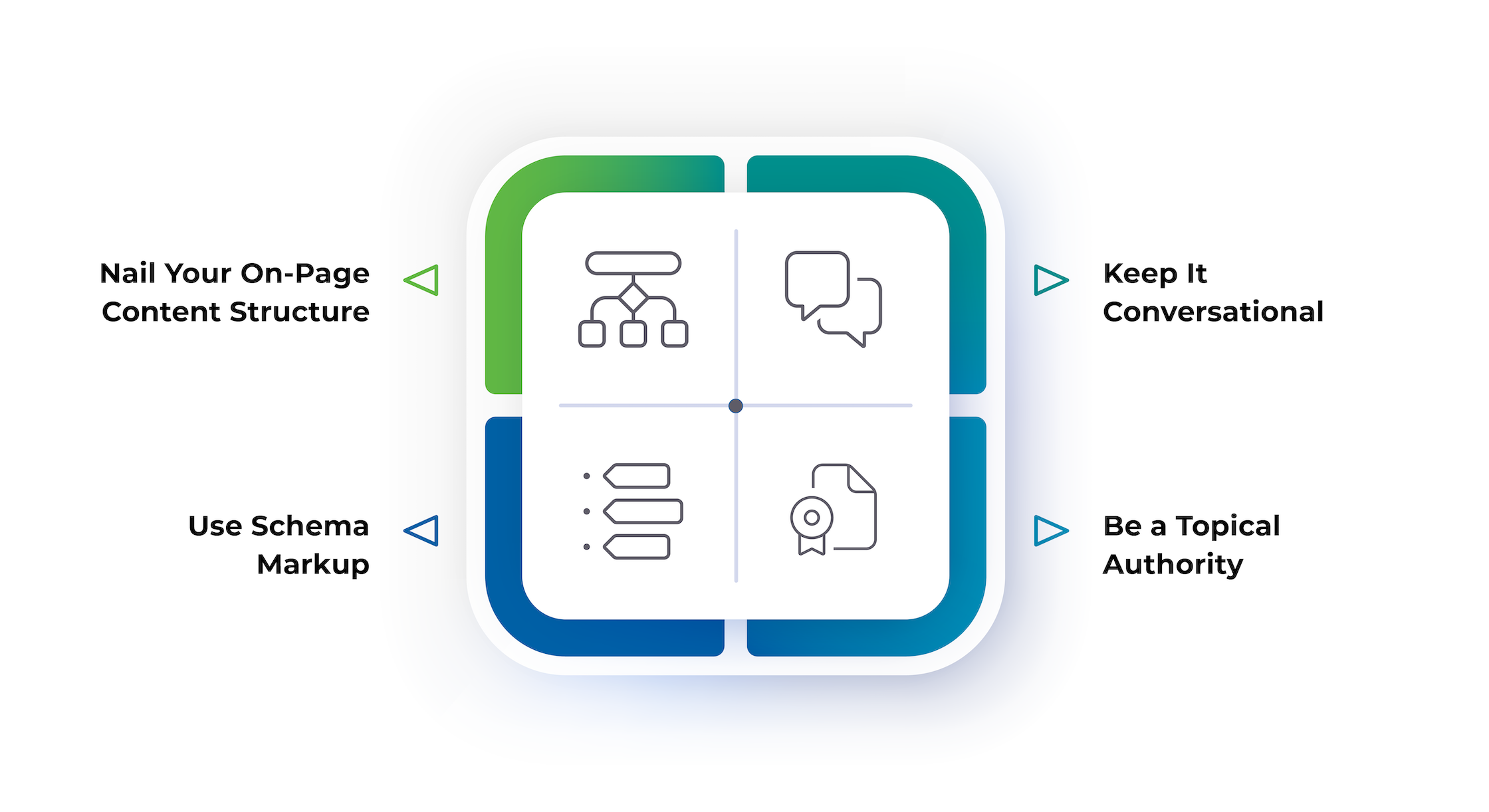
3. Use Schema Markup
✔️ FAQ & HowTo: Use these for question-based or process-focused content. Search engines will better understand your page structure.
✔️ Organization and Author Schema: Let the search engines and AI bots know who you are and what you offer. This builds credibility.
4. Be a Topical Authority
✔️ Go Deep, Not Wide: One-page, surface-level content won’t cut it anymore. Google and AI search tools like content that covers a topic from multiple angles.
✔️ Create Supporting Content: Link multiple pieces around a topic together. This helps establish your expertise on a subject.
✔️ Keep It Fresh: Refresh old articles, update stats, and re-optimize for emerging AI search trends to maintain visibility.
The search game has changed. Featured snippets, zero-click searches, and AI Overviews may reduce traditional click-throughs, but they increase visibility, brand authority, and trust when leveraged correctly.